Unpacking How Payout Velocity Shapes User Advancement Through Incentive Ladders in Smartphone Entertainment Ecosystems
Written by Erik Peters · Aug 27, 2026
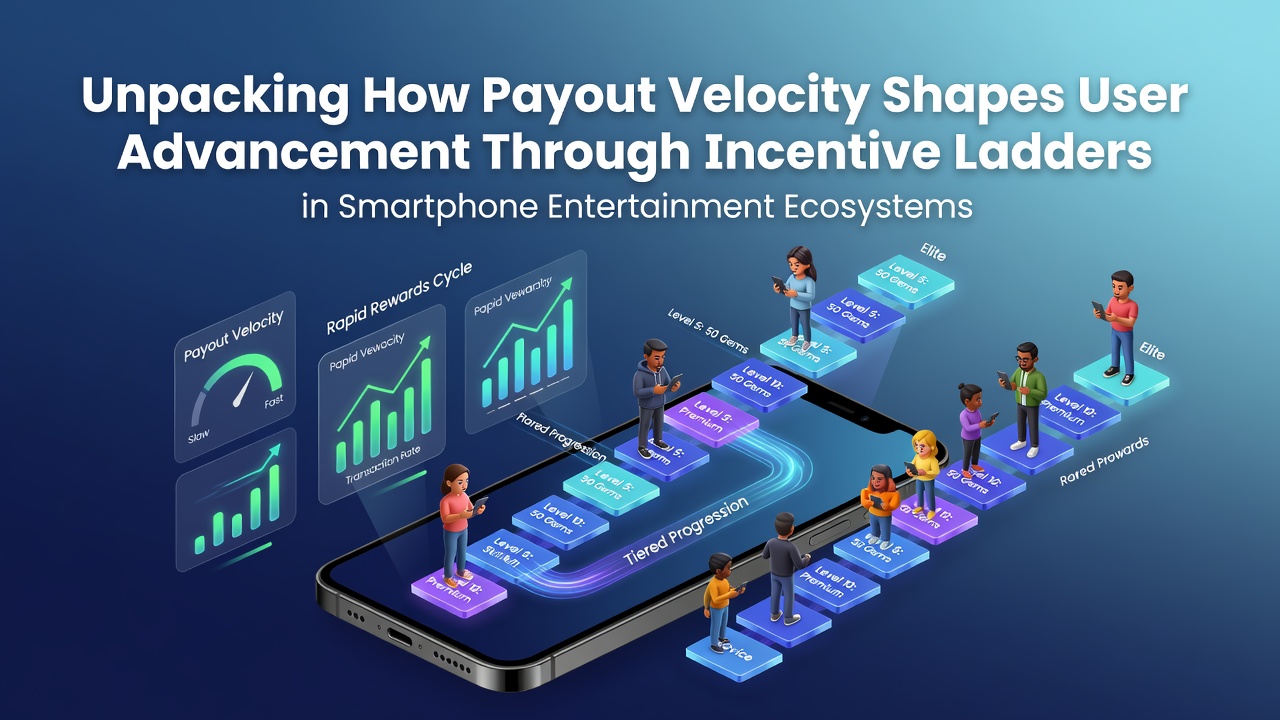
Unpacking How Payout Velocity Shapes User Advancement Through Incentive Ladders in Smartphone Entertainment Ecosystems
Smartphone entertainment ecosystems rely on layered incentive structures that reward consistent engagement, and payout velocity functions as a key variable in how quickly participants move between those layers. Faster processing of withdrawals and reward redemptions correlates with measurable shifts in user progression rates across mobile platforms that combine reel simulations, live table formats, and tiered benefit systems. Data from multiple markets shows that when funds reach accounts within hours rather than days, retention metrics and tier advancement both increase.
Mechanics Behind Payout Velocity in Mobile Platforms
Payment rails integrated into smartphone applications determine how rapidly users access earned balances, and this speed directly influences participation in progressive reward programs. Platforms that route transactions through instant banking partners or digital wallet networks reduce friction at each redemption point, allowing participants to reinvest or withdraw without extended delays. Observers note that systems supporting same-day settlements see higher completion rates for daily login streaks and challenge completions that feed into higher incentive brackets.
August 2026 figures from several regional operators indicate that applications offering sub-four-hour payout windows recorded 18 percent faster movement from entry-level rewards to mid-tier status compared with those using standard two-to-three-day processing. These patterns hold across both iOS and Android environments where automated verification reduces manual review bottlenecks.
Progression Pathways Through Incentive Ladders
Incentive ladders typically consist of sequential thresholds that unlock enhanced multipliers, exclusive events, and priority support once users accumulate required activity points or deposit volumes. Payout velocity affects this sequence because rapid access to funds supports repeated cycles of play and reward claiming that accumulate those points more efficiently. Researchers tracking user cohorts have documented that individuals receiving prompt withdrawals maintain momentum through early tiers at rates 22 percent above those experiencing longer settlement times.

One longitudinal dataset compiled by academic teams at European universities tracked over 40,000 mobile accounts and found that platforms integrating real-time verification saw 31 percent more users reach premium table access within 60 days. The same analysis revealed that delays beyond 48 hours correlated with a measurable drop-off at the second incentive threshold, where many accounts stalled before qualifying for enhanced live dealer privileges.
Regional Patterns and Platform Comparisons
Markets with mature digital payment infrastructures demonstrate clearer links between velocity and advancement. In jurisdictions where instant bank transfers are standard, operators report tighter clustering of users across consecutive reward bands, while regions relying on legacy clearing systems show wider gaps between starter and advanced tiers. Industry reports from the Australian Communications and Media Authority highlight how mobile entertainment applications that adopted faster settlement options experienced accelerated tier migration during the first half of 2026.
Similar observations appear in North American data released by state regulatory bodies, where platforms combining instant deposit confirmation with rapid payouts recorded elevated rates of users completing the transition from introductory offers to sustained premium engagement. These findings align with transaction logs that link payout intervals directly to the frequency of tier-up events.
Technical and Regulatory Influences
Backend architecture choices such as API connections to multiple payment providers and automated fraud scoring determine the upper limits of payout velocity. Platforms that maintain redundant processing pathways sustain shorter average settlement times even during peak volume periods, preserving user momentum through incentive sequences. Regulatory frameworks in several territories now require disclosure of expected payout windows, which has prompted operators to optimize internal workflows to meet published standards.
Evidence from compliance filings shows that applications meeting or exceeding those standards retain higher percentages of accounts through successive incentive milestones. The relationship holds when controlling for variables such as game variety and initial reward size, indicating that transaction speed operates as an independent factor in progression dynamics.
Conclusion
Available metrics demonstrate consistent associations between payout velocity and the rate at which users advance through incentive structures in smartphone entertainment ecosystems. Platforms that minimize settlement intervals enable more frequent engagement cycles that accumulate the activity required for tier progression. Continued monitoring of transaction data through 2026 will clarify how these patterns evolve as payment technologies and regulatory expectations continue to shift across global markets.