Tracing how animation fluidity in handheld interfaces shapes movement from entry incentives toward customized membership levels across global gaming apps
Written by Greta Washington · Jun 25, 2026
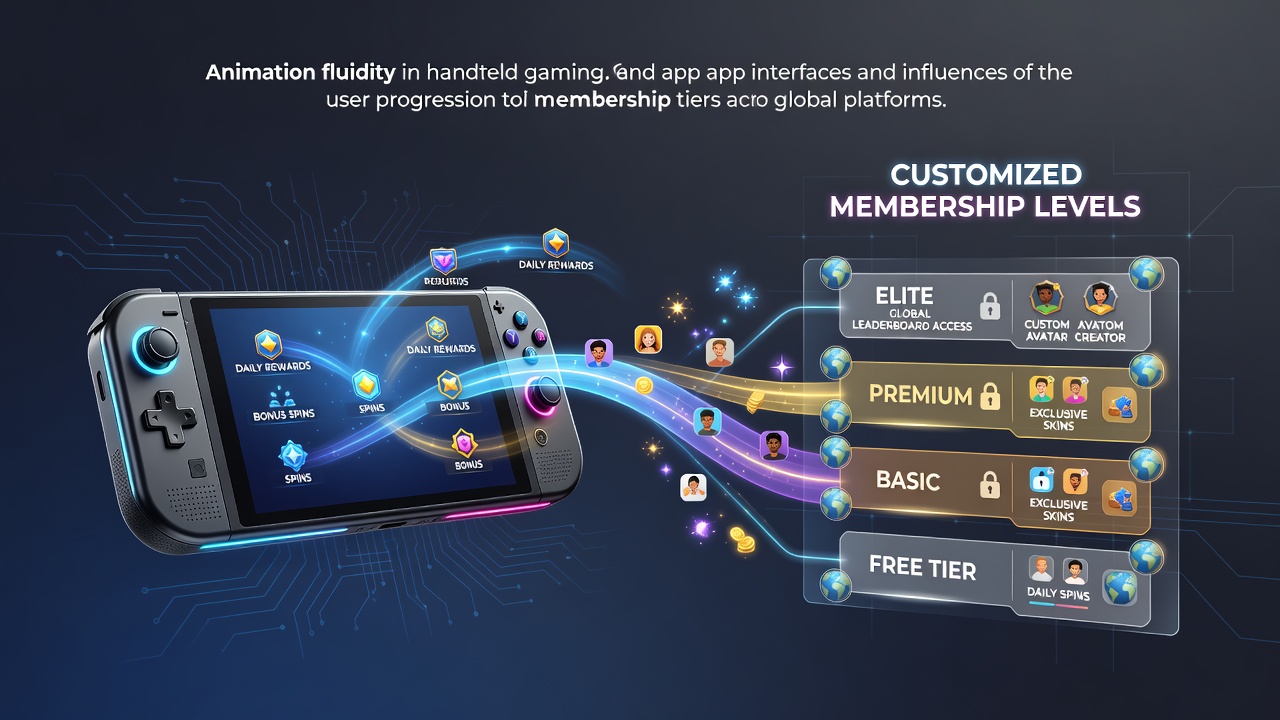
Tracing how animation fluidity in handheld interfaces shapes movement from entry incentives toward customized membership levels across global gaming apps
Animation fluidity in handheld interfaces refers to the seamless motion of elements such as buttons, screens, and reward notifications that respond instantly to user input on smartphones and tablets. Developers design these movements to reduce perceived loading times and maintain visual continuity while players navigate from initial entry points to more advanced features. Research from the Entertainment Software Association indicates that apps incorporating 60 frames-per-second transitions retain user attention longer during the first session compared with static layouts.
Entry incentives appear as free spins, starter packs, or daily login rewards in many global gaming apps, and fluid animations highlight these offers through expanding icons or sliding panels that draw the eye without abrupt jumps. When a player taps to claim an incentive, the interface morphs the reward into an inventory slot using easing curves that slow the motion at the end, creating a sense of physical weight. Observers note that such techniques appear consistently across markets in Asia, Europe, and North America, where download volumes for mobile titles reached record levels by early 2026.
Interface Design Patterns That Guide Initial Progression
Developers layer multiple animation types to move users past the entry stage. Particle effects accompany coin counters that increment in real time, while menu drawers slide open from the side with momentum-based deceleration. These choices align with findings from a University of Melbourne study on mobile interaction, which measured reduced task completion times when animations matched physical expectations. Players encounter tiered membership prompts after completing a set number of incentive-based actions, and the transition between screens uses parallax scrolling to suggest depth.
Global gaming apps adapt these patterns to regional preferences. Titles popular in Japan emphasize subtle particle bursts during reward collection, whereas European releases favor bolder color shifts that accompany progress bars filling toward the next membership threshold. Data compiled by the Interactive Games and Mobile Association shows consistent adoption of these techniques across platforms by June 2026, with over 70 percent of top-grossing apps employing at least three distinct animation sequences between entry incentives and membership screens.
Pathways from Starter Rewards to Tiered Memberships
Once players collect entry incentives, the interface directs them toward customization options through animated journey maps that update dynamically. A membership meter expands horizontally as criteria such as play frequency or in-app purchases accumulate, and each milestone triggers a short celebratory sequence before revealing new customization slots. Researchers at Singapore Management University documented that apps using these meter animations recorded higher rates of users reaching the second membership level within seven days of installation.
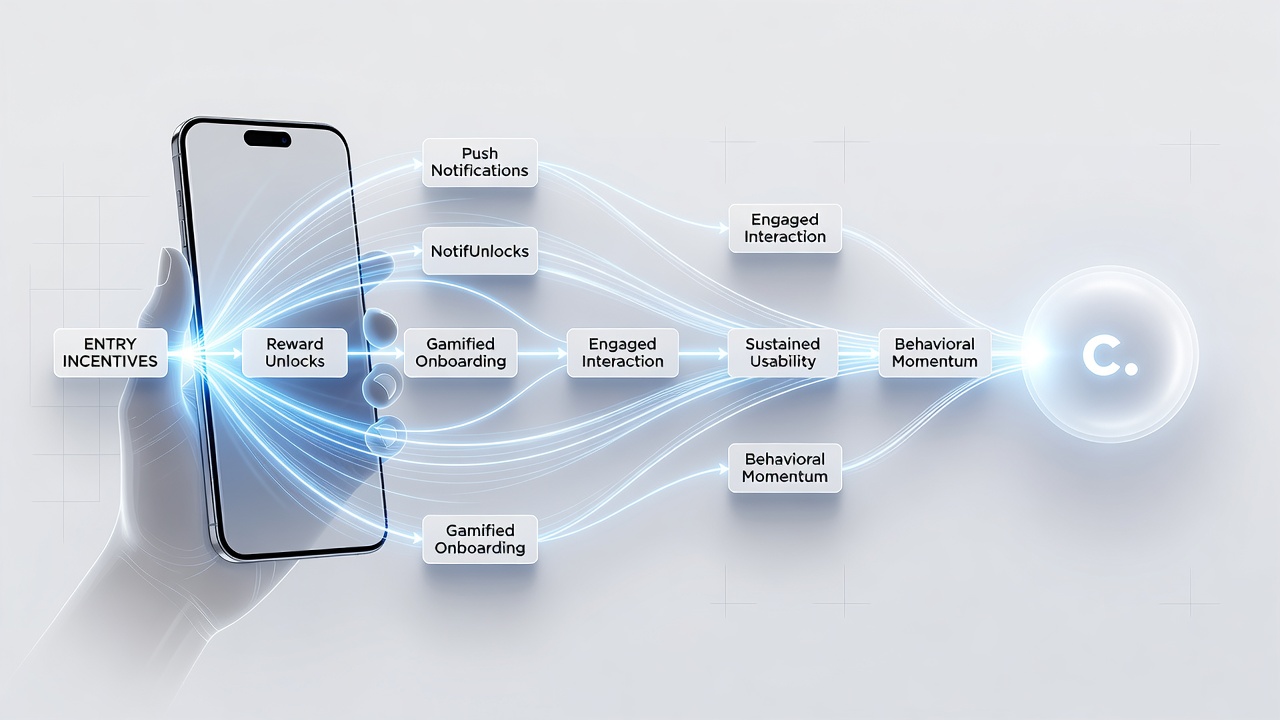
Customization becomes available at higher tiers, where players select visual themes or avatar modifications that the interface previews through live rotation animations. The movement from basic incentive collection to these choices relies on consistent animation timing so that users anticipate the next interaction point without explicit instruction. Figures released by the Australian Communications and Media Authority in mid-2026 revealed that apps maintaining animation consistency across reward and membership flows experienced steadier month-over-month retention in both established and emerging markets.
Technical Elements Supporting Fluid Motion
Behind the visible animations lie optimized rendering pipelines that handle simultaneous effects on devices with varying hardware capabilities. Developers employ hardware-accelerated compositing and predictive preloading so that membership upgrade screens appear before the user finishes the preceding animation. This approach prevents visual stuttering that could interrupt the perceived connection between incentives and progression. Industry reports from the Canadian Interactive Digital Entertainment Association note that optimization for mid-range Android devices contributed to broader accessibility of tiered membership systems by June 2026.
Sound cues synchronized with visual transitions further reinforce movement through levels. A soft whoosh accompanies a reward flying into the collection area, while a deeper tone marks the opening of a customized membership panel. These audio-visual pairings appear in documentation from multiple studios and align with broader patterns observed in both casual and mid-core titles across different regions.
Regional Implementation and Measurement
Markets in South Korea and Brazil have adopted rapid iteration cycles for animation timing based on aggregated user telemetry. Adjustments occur when data indicate that certain easing functions accelerate or slow progression rates between incentive stages and membership customization. European titles, by contrast, incorporate accessibility toggles that allow users to reduce motion intensity while preserving the logical flow from entry offers to tier benefits. Such variations demonstrate how animation fluidity serves as a flexible tool rather than a uniform standard.
Analytics platforms integrated into these apps track swipe velocity, tap frequency, and dwell time on animated elements to refine future updates. The resulting datasets help teams identify which sequences most effectively carry users from initial rewards toward personalized membership features without requiring additional prompts.
Conclusion
Animation fluidity operates as a connective mechanism in handheld gaming interfaces, linking entry incentives to customized membership pathways through consistent visual and interactive cues. Global apps continue to refine these techniques using performance data gathered through June 2026, maintaining focus on hardware compatibility and regional preferences. The measurable outcomes appear in retention metrics and tier advancement rates reported by industry groups and academic researchers, confirming the structural role of motion design in user progression across diverse markets.