Tracing Border Policy Shifts and Their Effects on Journey Mapping in Regulated Digital Gaming Applications
Written by Carlo Long · Aug 23, 2026
Tracing Border Policy Shifts and Their Effects on Journey Mapping in Regulated Digital Gaming Applications
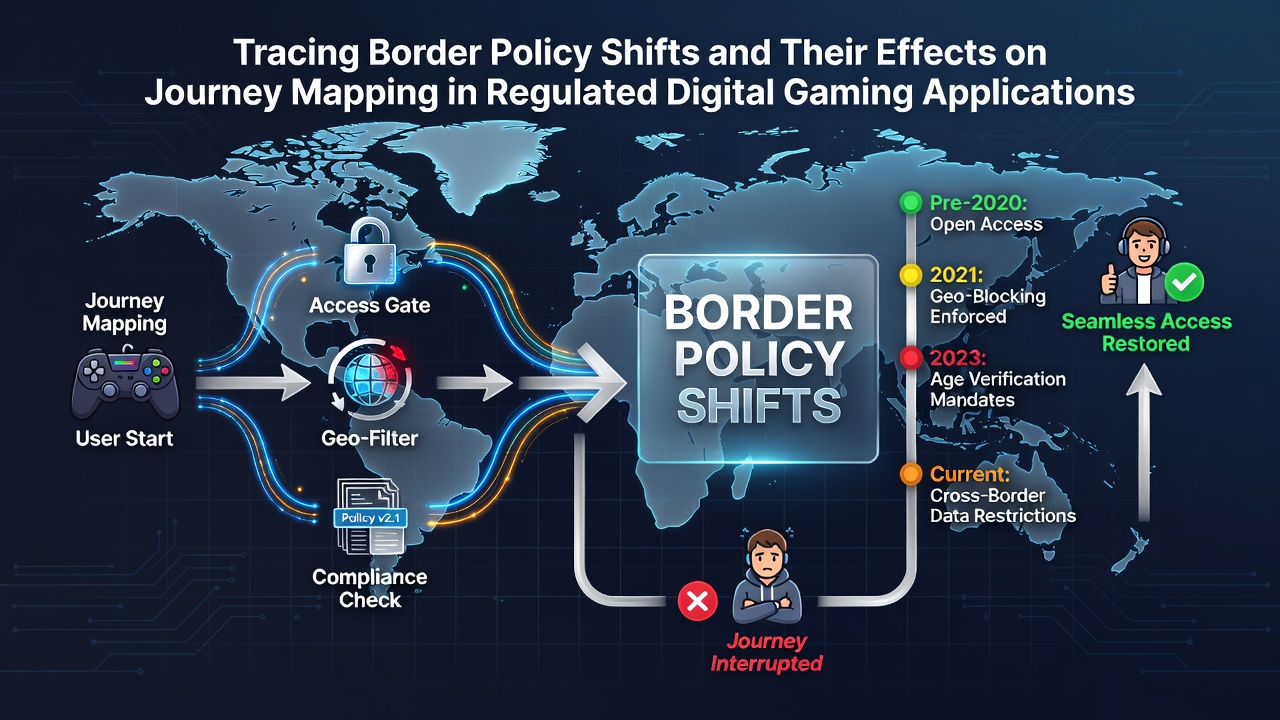
Border policy shifts have reshaped how users move through regulated digital gaming applications, altering everything from initial access points to payment processing sequences and account verification steps. These changes stem from evolving international agreements, data transfer rules, and licensing requirements that cross national lines, forcing developers to adjust the pathways players follow when entering, navigating, and exiting platforms.
Understanding Border Policies in Digital Gaming Contexts
Regulators across multiple regions have updated rules on cross-border data flows and service licensing, which directly influence the sequence of actions required for users to complete registration or fund accounts. In the European Union, updates to digital services frameworks have required gaming operators to implement region-specific compliance checks before users can proceed past the welcome screen. Similar adjustments appear in Australian and Canadian jurisdictions where authorities coordinate on payment gateway approvals that span borders.
Data from industry reports indicate that operators must now map user journeys with additional decision branches to account for geo-location signals and policy-driven restrictions. These branches often include prompts for users to confirm residency status or accept revised terms that reflect new bilateral agreements between countries.
Key Shifts Observed Through 2026
By August 2026, several policy adjustments had taken effect, including tightened controls on international player data transfers in parts of Asia and North America. These measures require applications to pause certain features until users complete additional verification layers tied to their declared location. Researchers tracking these developments note that journey maps now incorporate more conditional flows, such as temporary holds on live table access until border compliance flags clear.
One study from academic institutions examining gaming regulation highlighted how operators in multiple markets revised their onboarding sequences to include automated checks against updated sanction lists and cross-border licensing databases. This revision extended average completion times for first-time users by integrating extra confirmation screens without disrupting overall platform functionality.
Effects on User Journey Mapping
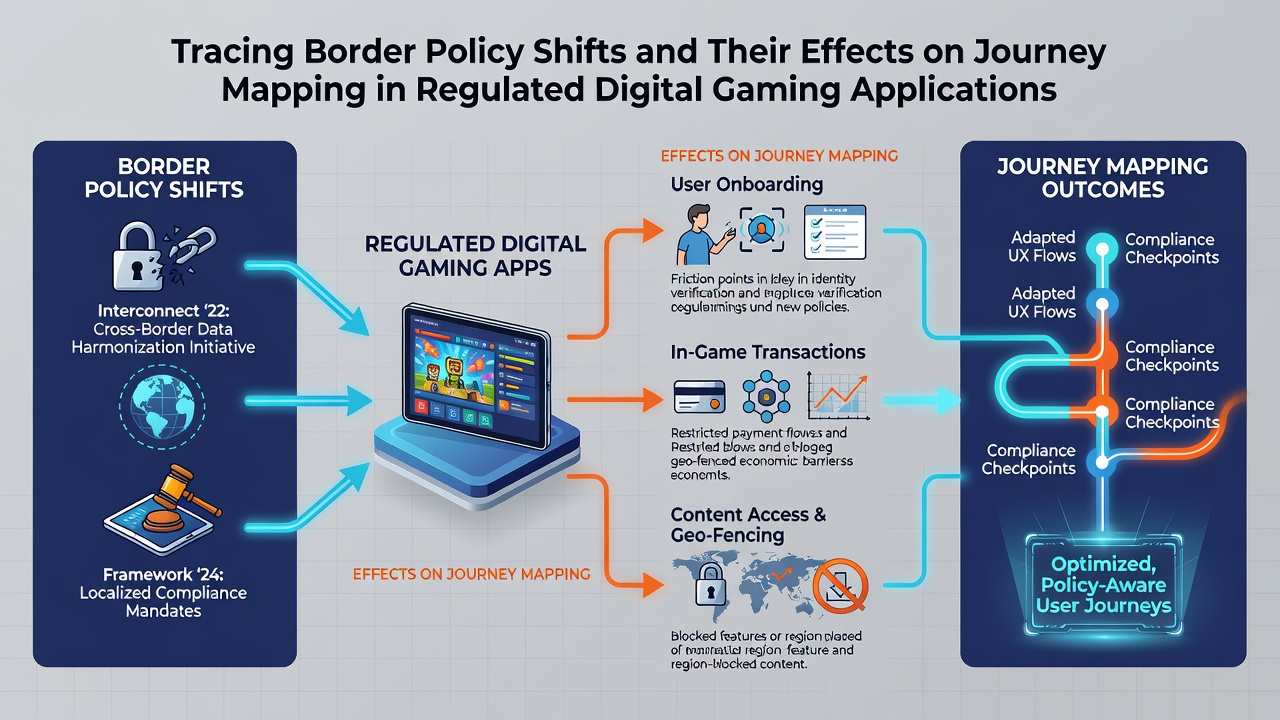
Journey mapping in regulated digital gaming applications now accounts for policy variables that determine which game categories appear first or whether certain payment methods activate based on the user's detected region. Observers note that these mappings include parallel paths where users from different jurisdictions follow distinct sequences for identity confirmation and fund transfers.
According to regulatory filings from bodies like the Australian Communications and Media Authority, operators must document every alteration to user flows when policies change, ensuring transparency in how border rules affect progression from free play modes to paid sessions. This documentation reveals that many applications now embed dynamic routing logic that reroutes users through alternative verification partners when primary cross-border channels face temporary restrictions.
Those who have analyzed these shifts point to concrete examples where payment innovation teams adjusted API integrations to comply with new data residency requirements. The adjustments created smoother transitions for users in approved regions while inserting additional review steps for others, preserving regulatory alignment without halting service entirely.
Regional Variations and Their Impact
North American markets show distinct patterns compared to European ones, with state-level licensing in the US creating fragmented journey segments that operators must reconcile at the application level. Canadian federal guidelines on digital services add further layers, requiring explicit consent screens before users can access multiplayer features that involve international participants.
Evidence from trade association reports suggests that these regional differences prompt developers to maintain multiple versions of core journey maps, each tuned to specific policy environments. This approach allows platforms to activate the appropriate sequence based on real-time location data while maintaining a consistent visual interface across borders.
Conclusion
Border policy shifts continue to drive refinements in journey mapping for regulated digital gaming applications, with operators adapting flows to meet compliance demands while preserving user progression. Data indicates that these adaptations center on verification timing, payment routing, and feature availability, all calibrated to align with evolving international and regional requirements. As policies develop further, ongoing adjustments to these maps will shape how users interact with platforms across different jurisdictions.