How Cultural Festivals Reshape Participation Patterns in Digital Gaming Environments Within Southeast Asian Markets
Written by Greta Washington · Jul 21, 2026
How Cultural Festivals Reshape Participation Patterns in Digital Gaming Environments Within Southeast Asian Markets
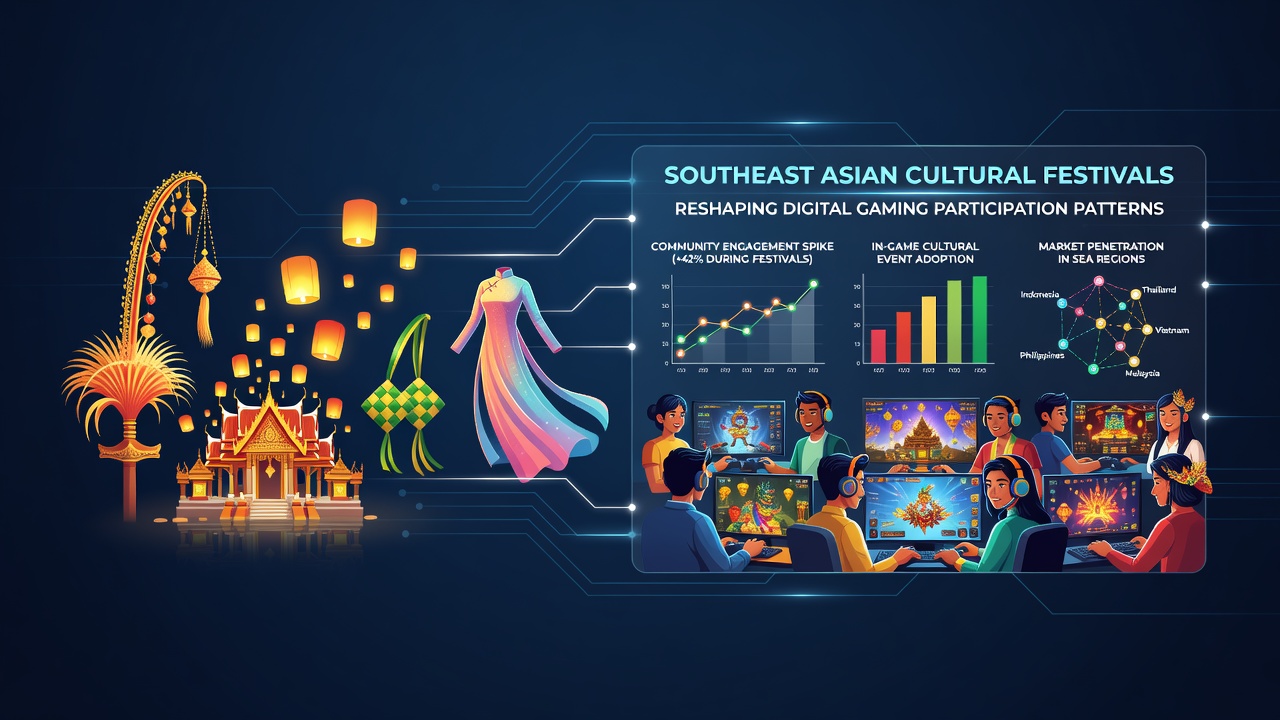
Digital gaming across Southeast Asia experiences measurable shifts during major cultural festivals, and data collected between 2023 and mid-2026 shows clear patterns in player engagement, session duration, and community interaction. Markets in Thailand, Vietnam, Indonesia, Malaysia, and the Philippines demonstrate consistent increases in mobile game downloads and in-game purchases that align with festival calendars rather than standard quarterly cycles.
Festival Calendars Drive Seasonal Spikes in Mobile Engagement
Thailand's Songkran celebrations in April coincide with extended play sessions in multiplayer titles, while Vietnam's Tet period in late January or early February produces similar spikes; researchers tracking user data from regional app stores report download surges of 25 to 40 percent during these windows compared with non-festival months. Indonesian players show parallel behavior around Eid al-Fitr, when family gatherings often include shared device gaming that extends into evening hours. These patterns emerge because festivals create blocks of unstructured time and social settings that favor portable entertainment over scheduled activities.
Community Events and In-Game Collaborations
Game developers respond to these calendar-driven opportunities by releasing limited-time content that mirrors local traditions. Vietnamese studios frequently introduce Lunar New Year skins and cooperative missions that require group participation, while Thai platforms host water-festival themed tournaments that reward consistent log-ins over consecutive days. Participation data indicates that players who join these events maintain higher daily active rates for three to four weeks afterward, suggesting the festival window functions as an onboarding accelerator rather than an isolated peak. Observers tracking Southeast Asian markets note that cross-promotions between games and local cultural apps further amplify retention when players receive festival-themed rewards through integrated social features.
Regional Infrastructure Supports Expanded Access During Holidays
Improved mobile networks and subsidized data plans across urban and semi-urban areas enable broader participation precisely when families travel or gather. Figures released by regional telecommunications authorities reveal that average daily data consumption in gaming categories rises noticeably in the days preceding and following major holidays, reflecting both increased leisure time and the practical reality of shared household connections. Malaysia's Hari Raya period and the Philippines' Christmas-to-New Year stretch illustrate the same dynamic, with players migrating from console or PC formats toward smartphones that accommodate group viewing and quick matches between meals or ceremonies.
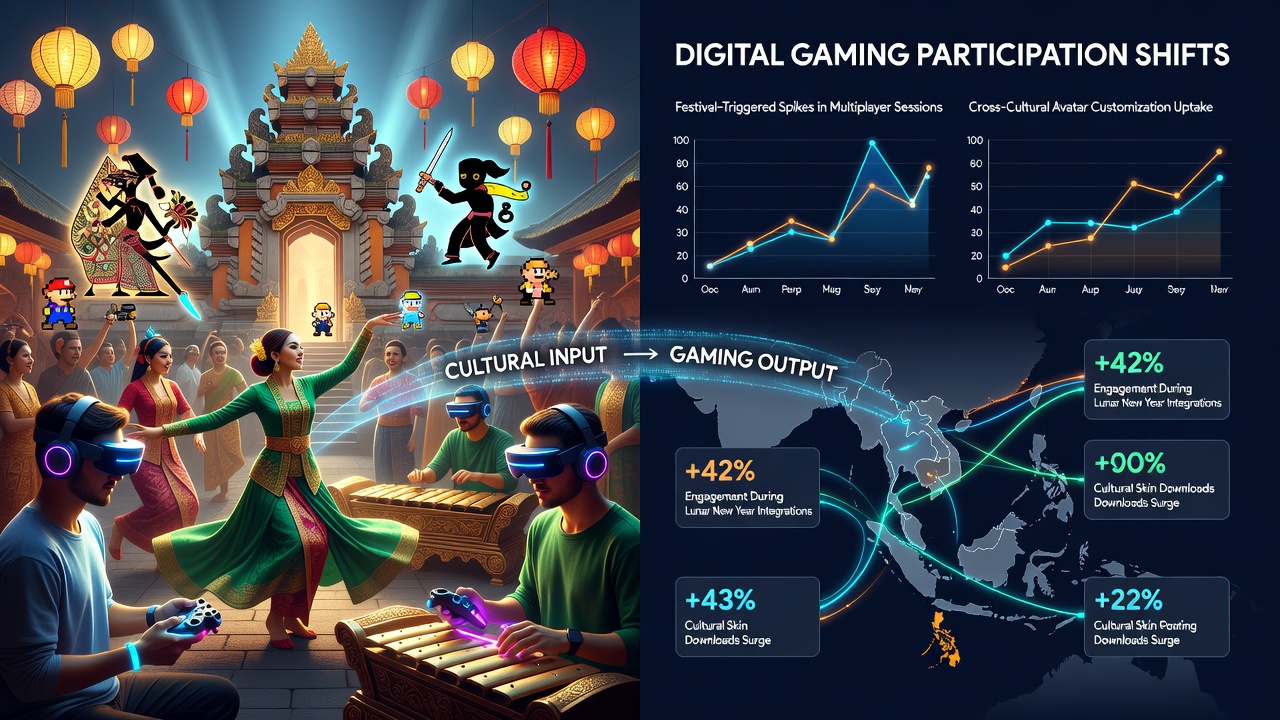
Academic studies conducted at universities in Singapore and Bangkok document how these infrastructure advantages translate into new player acquisition. One longitudinal analysis covering 2024 through July 2026 found that festival-timed marketing campaigns generate conversion rates 15 to 30 percent higher than campaigns run during neutral periods, largely because social sharing within extended family networks replaces traditional advertising channels. The same research highlights that players introduced during festivals show stronger tendencies to explore multiple genres once the holiday concludes, expanding beyond initial puzzle or casual titles into strategy and battle-royale formats.
Payment and Reward Systems Adapt to Cultural Timing
Regional payment providers adjust transaction limits and promotional structures to match festival spending habits, and this flexibility correlates with elevated in-app purchase volumes. Data compiled by industry associations in Indonesia and Vietnam shows that digital wallet usage for game-related transactions peaks during the week before Eid and Tet, driven by gift-giving customs that extend to virtual items. Developers who align reward calendars with these customs report sustained revenue per user that remains elevated for six to eight weeks post-festival, indicating that the initial cultural trigger creates lasting behavioral pathways rather than temporary surges alone.
Demographic Shifts in Player Composition
Participation demographics broaden during festivals as older family members join younger players in casual sessions, and telemetry from major platforms indicates a temporary rise in users aged 35 and above during these periods. This expansion introduces new social dynamics within games, including cooperative play across generations and increased use of voice features that accommodate group settings. Once festivals end, a portion of these new participants continue logging in at reduced but steady frequencies, contributing to overall market growth that compounds year over year.
Long-Term Effects on Regional Gaming Ecosystems
Patterns observed through mid-2026 suggest that repeated festival cycles strengthen localized content development and community management practices. Studios that consistently produce culturally resonant events build player loyalty that persists across non-festival months, while platforms that neglect seasonal alignment experience flatter engagement curves. Government digital economy reports from multiple ASEAN members note that gaming now represents a measurable component of holiday-related consumer spending, prompting infrastructure investments that further support year-round participation. These interconnected factors create feedback loops where cultural timing influences both immediate behavior and the structural evolution of Southeast Asian digital gaming markets.
Conclusion
Cultural festivals function as recurring catalysts that alter participation rhythms in Southeast Asian digital gaming environments through predictable increases in access, content relevance, and social integration. Data spanning multiple markets demonstrates that these shifts extend beyond single-week spikes, shaping player retention, demographic diversity, and developer strategies well into subsequent quarters. As infrastructure and content practices continue to evolve in alignment with festival calendars, the relationship between cultural events and gaming participation remains a central dynamic within the region's expanding digital entertainment sector.